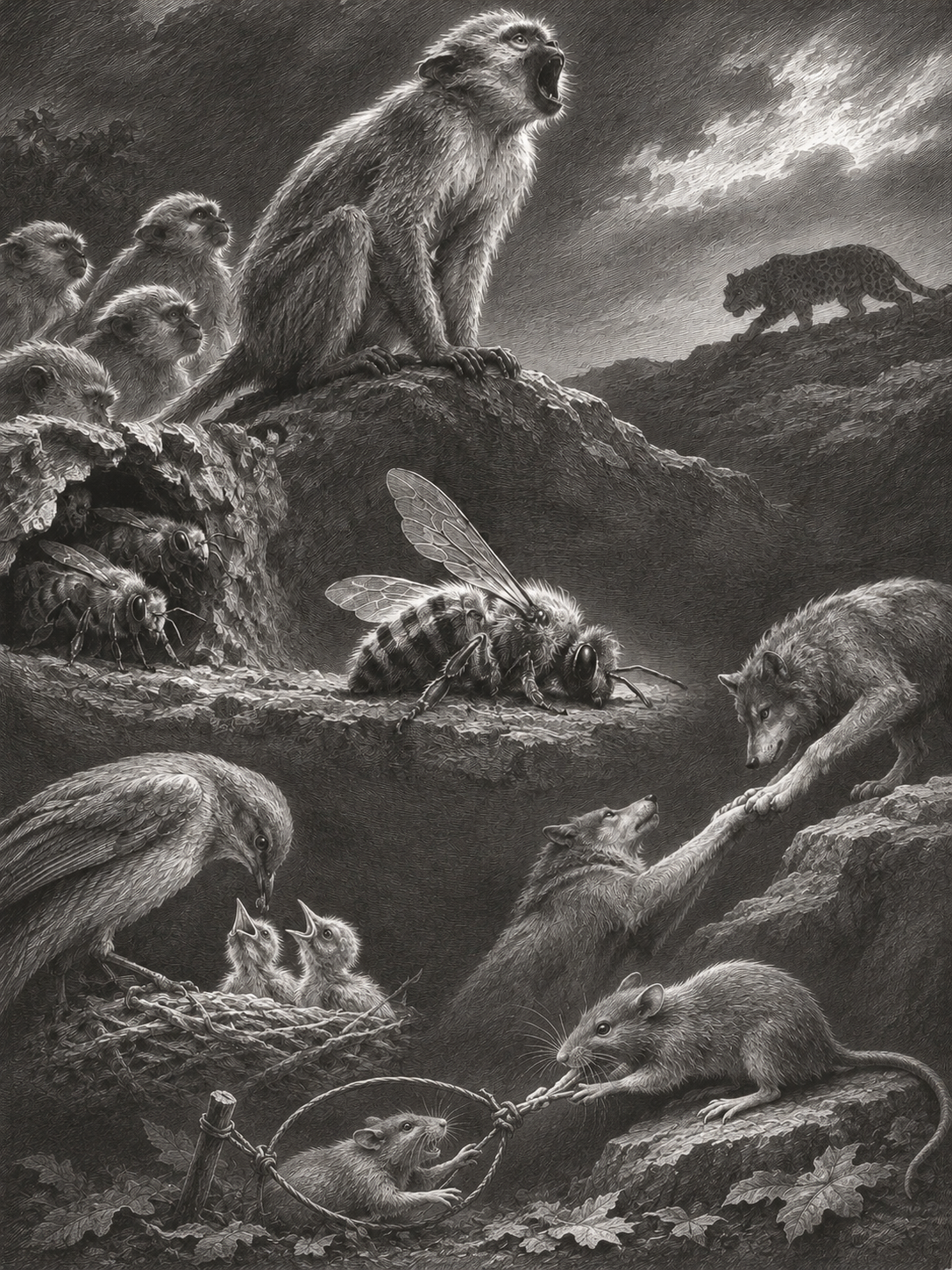
Nature is full of altruism — vervet monkeys shout alarm calls that draw a predator's attention to themselves, worker bees die defending the hive, parents starve so their young can eat.
Selection should ruthlessly punish that. An organism that sacrifices its own survival to help another should leave fewer copies of itself behind — so how does self-sacrifice survive selection at all?
Dawkins' answer: look one level down. Kin selection (W.D. Hamilton) — a gene for helping relatives can spread if it helps enough copies of itself in their bodies, discounted by relatedness. Reciprocal altruism (Robert Trivers) — helping a non-relative who is likely to help you back.
The organism can be generous because the gene is not — it is simply exploiting every available route to more copies of itself, kinship and reciprocity included.